





















Troubleshooting problems with the feed conversion ratio
Feed represents approximately 60% of the costs in pig production. It is therefore very important to have a good feed conversion ratio.

The factors that can have an impact and why
In pig production, as with other species, the two key factors that have historically determined the profitability of farms and companies have been pig prices and the cost of feed, the latter being the strongest determining factor of production costs, representing approximately 60% of the total. The following graph shows the breakdown of costs for various countries in 2020.
Graph 1. Importance of feed in the breakdown of costs per kg of carcass. Source: Interpig, 2020.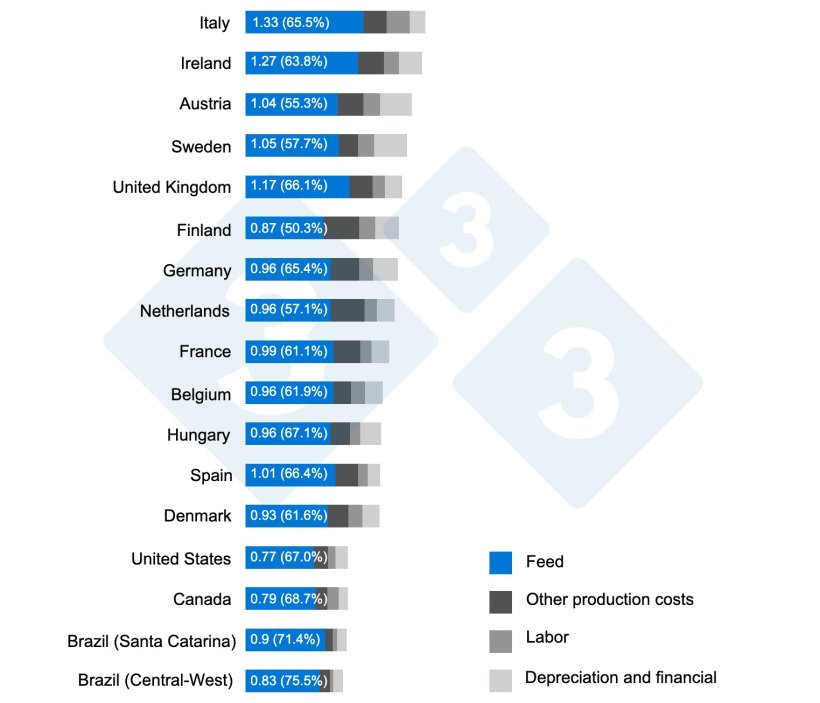
The feed conversion ratio (FCR) is the parameter that indicates the animal's efficiency in converting feed into meat. Two main groups should be highlighted among the main factors affecting the feed conversion ratio: internal factors and external factors.
Internal factors
Internal factors are defined as those that depend directly on the animal and are determined directly by body composition, which is determined by sex and genotype, and by the immune system activity, which will naturally depend on exposure to pathogens, but also depends on substances that, via the digestive tract, can exert an inflammatory, immunostimulant, or immunomodulatory effect. The more the immune system is stimulated, the more nutritional resources it will need, which will increase the basal maintenance, negatively affecting the feed conversion ratio.
External factors
External factors are perhaps the best known and most talked about, nevertheless they have not ceased to be important. In fact, at a practical level, they are those on which we can act relatively easily and which will allow us to optimize the feed conversion ratio of a particular genotype and sex. The external factors that we should highlight are:

Troubleshooting when the feed conversion ratio is high
There are several situations in which the feed conversion ratio in the grow/finish phases can be elevated. Naturally, the first step in establishing a diagnosis is to have a reference to which to compare. This reference feed conversion ratio value will be different for each situation, as it will depend on the genetics used in the female line and the boar, the feed used, the location of the farms, the type of installations, and above all, the weights at entry and exit. Low starting weights tend to reduce the FCR as do low exit weights, while the opposite is true when weights are increased. To make things easier, as a reference point we could take the latest average values of the consolidated data for the period July 20-June 21 provided by SIP Consultors (data from Spain).
| Nursery 5.9 kg - 18.9 kg |
Finishing 18.9 kg - 113.6 kg |
|||||
|---|---|---|---|---|---|---|
| Low | Mid | High | Low | Mid | High | |
| Feed conversion ratio | 1.52 | 1.64 | 1.75 | 2.34 | 2.46 | 2.59 |
| Gain (g/day) | 320 | 281 | 242 | 766 | 714 | 663 |
Low values represent the mean -1SD while high values represent the mean +1SD.
Once we have a diagnostic benchmark we will reach it by applying the following decision process.
