

















Feeding the enemy: more coinfections lead to more lymphoblasts, increasing the chances for PCV2 to replicate
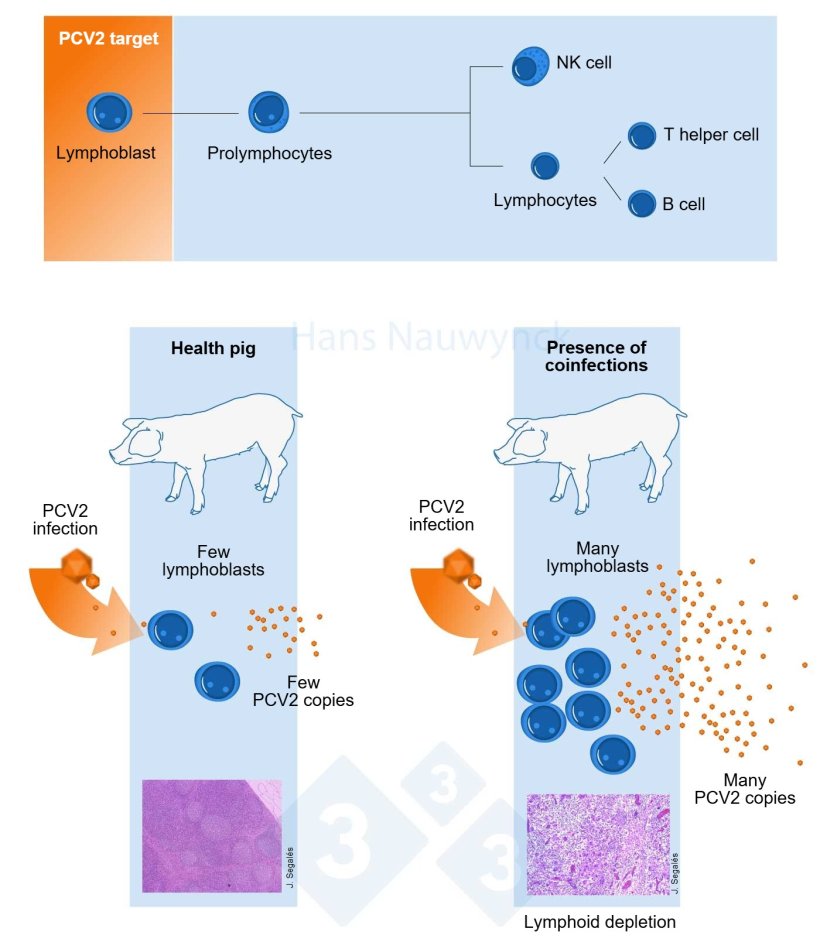
In healthy animals, PCV2 stays under the radar, causing little harm. But with coinfections that activate the immune system, the virus replicates more and becomes more damaging.

As Hans Nauwynck explains in his previously published articles "Understanding viruses from the cell to the farm" and "What is driving PCV2 evolution?", PCV2 replicates in the lymphoblasts, the immune-stimulated lymphocytes.
In a high health animal that is not exposed to other infections, PCV2 has little power. It will replicate at low levels. But, when multiple coinfections generate a strong stimulation of the immune response including the creation of lymphoblasts, PCV2 can replicate in a higher degree, and the impact of the virus will become more destructive.